
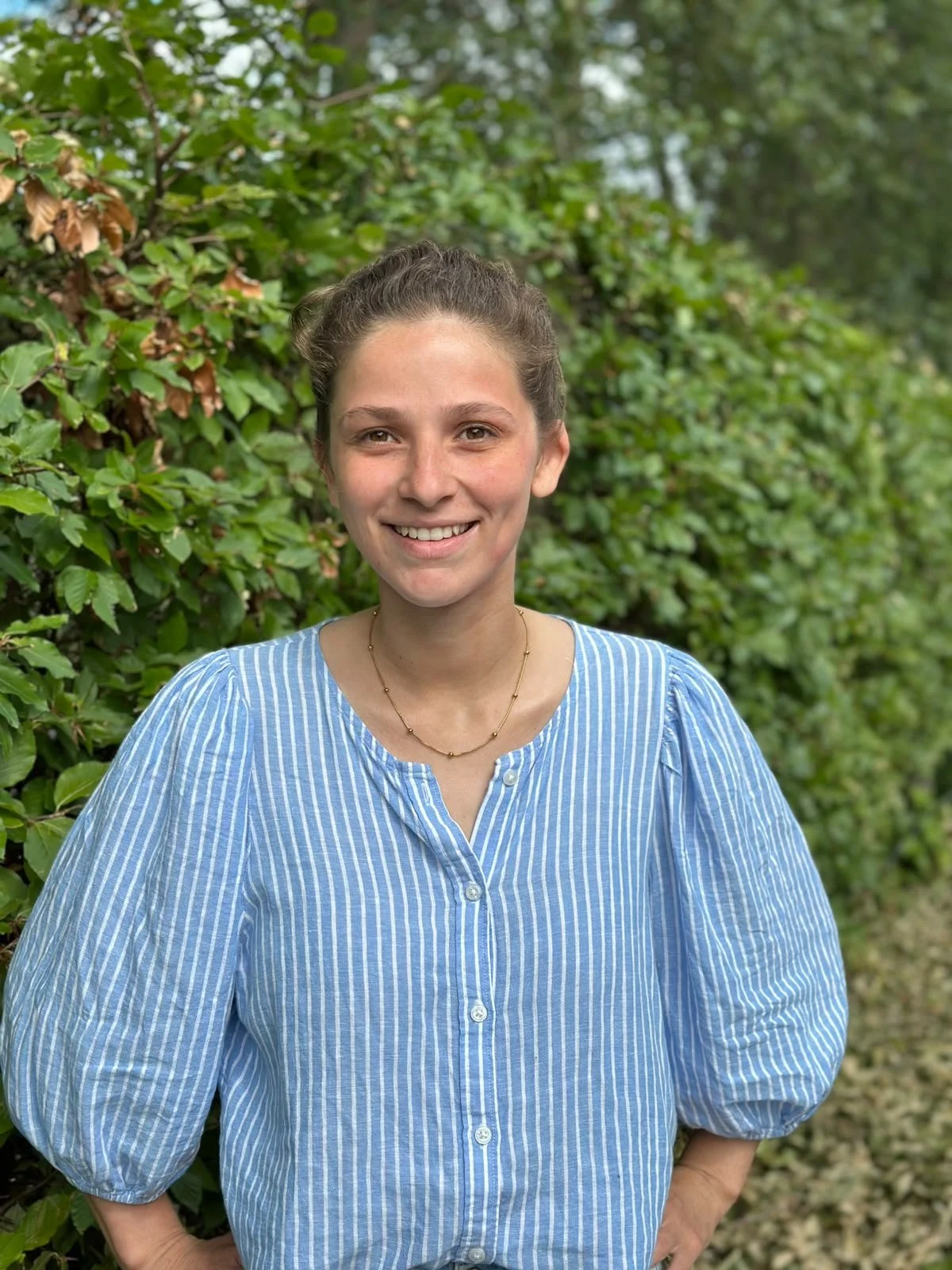
Hi, I’m Natascha
I’m a health and medical psychologist with a deep interest for women’s health. After completing my bachelor’s I was considering becoming a midwife, but after witnessing a birth at the hospital, I decided to stick to my lane and focus on women’s health from a psychological perspective. Turns out, I am better at explaining how pain works, than watching someone experience it!
I am originally from Vienna, but grew up across continents, moving between Buenos Aires, Miami, Johannesburg, Toronto, Vienna, Malta, and now Leiden. That kind of upbringing made me adaptable, curious, and comfortable with not quite fitting into one category.
In terms of my experience within women’s health: I wrote my Bachelor’s thesis about endometriosis, depression and pain acceptance. And my Master’s thesis explored how expectations of pain and pain relief during childbirth shape the experience, and how those expectations can be worked with. I also completed a research internship on the effects of hormonal fluctuations on mood and brain activity and spent the past six months working for the Dutch endometriosis foundation (for the Dutchies, here is an article I’ve written for the foundation).
Right now, I am teaching Bio- and Neuropsychology to Bachelor students at Leiden University and working as a Dementia Researcher at the Leiden University Medical Center. This work is helping me develop my research and teaching skills, while my long-term goal is to work in the intersection of women’s health and psychology, contributing to research and education that this field so urgently needs.
Clinical Curiosity is where I share what I am learning and what I am thinking about. Mostly women’s health and mental health, but also whatever other topics I am currently gaining depth in. My aim is to write the content I wish had existed when I was first navigating these topics - scientifically accurate, honest, and not too simplified.
There is a lot of information about women's health online, but it tends to fall into one of two camps: very medical - think lists of symptoms and surface-level treatment overviews - or deeply personal accounts of living with an illness. Both have their place, but neither quite fills the gap. That's what Clinical Curiosity aims to do: bring a psychological perspective to these topics, with genuine understanding of the patient experience, while keeping the information scientifically verified and actually interesting to read.
My usage of AI:
In our new world of AI, I too find its use very attractive - I could “create” 100s of perfectly formulated articles, fitted for my target audience - and I could sign my name underneath it. But that doesn’t feel right to me, it feels inflationary; then the worth of the articles is very low and I wouldn’t really be proud of sharing them.
I can’t help but notice that more and more of the media and information I am consuming is created by AI. I see less and less original thoughts and opinions shared online. Less and less people actually thinking about what they want to write and what words they want to use.
The balance I chose to keep for this website: I am using AI for learning basic information on topics that I don’t have a lot of experience in. But I am using scientific literature, expert opinions and experiences for answering more complex questions or topics. I fully write my articles myself, think about the structure and message, and review them multiple times. But I will, for example, use AI to do a final spelling check or to check for which sentences might need simplification.